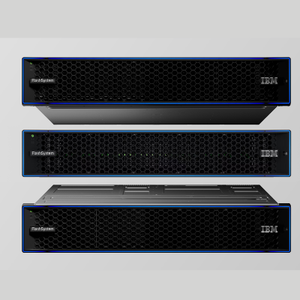
Data Center Infrastructure and Enterprise Storage Solutions
Your data center should be built to keep pace with your business, not hold it back. Volta helps organizations modernize infrastructure, improve storage performance, and simplify management with enterprise solutions designed for real workloads, growth plans, and budgets. From flash and hybrid storage to converged, hyper-converged, and high performance compute, our team brings the expertise and relationships needed to design, deploy, and support a stronger foundation for your IT environment.

Enterprise Storage
Each storage option we promote has its own benefits. We can help you choose the right fit for your business and budget needs.
Flash Storage Arrays
The cost of flash storage arrays has dropped to a better level over the years. It’s hard to miss the major benefits of a fast, well-tuned storage system at a fair price. Organizations facing large data growth and latency problems can gain a lot from the faster speed of flash memory.
Hybrid Storage Solutions
Hybrid storage delivers a low-cost, high-speed storage system built from flash-based storage and hard disk drives. Although flash storage has become more affordable, some organizations may find a mix of SSDs and HDDs to be a better value while still keeping strong performance in their infrastructure.
NAS
Network-attached storage (NAS) is a traditional file system design that can bring ease to a more traditional setup. It lets multiple users on a local area network (LAN) reach data from a shared disk through a standard Ethernet link. This type of storage is easy to use and supports high capacity at low cost.
Object Storage
Object storage holds large amounts of data through metadata tags. It does not use a tiered file structure. Instead, it stores everything in one pool where metadata is used for deep review of the data’s use and role. Benefits of object storage include near-limitless scale and fast data access.
Software-Defined Storage (SDS)
Software-defined storage (SDS) is managed through a single storage controller software interface for better efficiency and flexibility. Available in appliance-based and cloud-based models, SDS manages block, file, and object storage, as well as scale-up and scale-out applications. Because SDS separates storage setup, protection, and control from the physical hardware, the hardware can be upgraded more easily without disrupting the software rules and current operations.

Converged, Hyper-Converged, and HPC
Converged and hyper-converged systems offer compute, networking, and storage in an easy-to-deploy, scalable format. A single point of contact when issues come up and a shared management interface are key benefits of these systems. Likewise, high performance computing systems offer the flexibility needed to handle changing compute needs and deliver steady performance.
Converged Infrastructure
A converged system helps organizations gain better visibility and efficiency by combining storage, networking, and compute components into one platform.
Hyper-Converged Infrastructure (HCI)
Hyper-converged infrastructure lets you grow step by step and without disruption, while using virtualized compute and storage to move workloads to the best-fit environment. Hyper-converged solutions from our partners at Dell/EMC and NetApp provide simple and strong ways to modernize the data center without losing current investments.
High Performance Computing Systems (HPC)
HPC systems raise data processing speed in your company’s computing infrastructure, while using resources more efficiently to meet the demands of modern business operations.

Servers
Volta works with global leaders in enterprise technology. We have the knowledge, contacts, and skill to get the hardware your team needs for a refresh or upgrade.
- IBM: Powerful, scale-up servers from IBM include Z mainframe, Linux, and IBM Power family systems. IBM puts a strong focus on security for your IT infrastructure.
- Dell Technologies: The PowerEdge portfolio from Dell is broad. Explore rack servers, tower servers, specialty servers, and rugged servers for your data center.
- Lenovo: ThinkSystem servers run on Intel Xeon Scalable processors, and include racks, towers, Edge blades, and high-density servers to drive business growth.

Enterprise Support
Volta provides infrastructure support services to keep the systems vital to your company’s success well maintained and reliable. Our technical services team offers installation, migration, configuration, and maintenance for your environment, plus administration, monitoring, troubleshooting, and health checks. We have you covered for:
- User management
- Server configurations
- Access / security protocols
- Data migrations
- Database design, implementation, and optimization

Q&A
Question: How do I decide between flash, hybrid, NAS, object, and software-defined storage for my environment?
Answer: Start with your performance, capacity, and management needs.
If ultra-low latency and high IOPS matter most, such as for databases or VDI, flash delivers top speed at now-competitive costs.
If you need strong performance with tighter budgets, hybrid blends SSD and HDD to balance speed and price.
For shared file access on a LAN with large capacity at low cost, NAS fits well.
If you’re managing massive, growing data sets such as backups, media, and analytics and need near-limitless scale and rich metadata search, object storage excels.
When you want central, hardware-agnostic control across block, file, and object with easy upgrades and scaling, software-defined storage gives flexibility across appliance and cloud models.
Question: What’s the practical difference between converged and hyper-converged infrastructure?
Answer: Converged combines compute, storage, and networking as pre-tested building blocks managed together, but often as separate parts.
Hyper-converged (HCI) tightly joins virtualized compute and storage in one software-defined stack. That makes it easier to grow step by step without disruption and move workloads through one interface.
HCI is usually easier to scale node by node, while converged can suit teams that want separate but unified parts.
Question: When should I consider HPC systems instead of scaling standard servers?
Short answer: Choose HPC when workloads need steady, high-throughput compute or must handle spikes well. This is common in analytics, simulations, modeling, or large-scale data work.
HPC systems optimize parallel processing and resource use to speed up results instead of simply adding more general-purpose servers.
Question: Which server partners does Volta work with and what are their strengths?
Answer: Volta partners with IBM, Dell Technologies, and Lenovo. IBM offers secure, powerful scale-up platforms, including Z mainframe, Linux, and IBM Power systems, with a strong focus on security.
Dell’s PowerEdge portfolio is broad. It covers rack, tower, specialty, and rugged servers for diverse data center needs.
Lenovo ThinkSystem, powered by Intel Xeon Scalable processors, spans racks, towers, Edge blades, and high-density systems built for business growth.
Question: What support services can Volta provide during and after deployment?
Answer: Volta’s technical services cover installation, migration, configuration, and ongoing maintenance. They also handle administration, monitoring, troubleshooting, and health checks, including user management, server configurations, security and access protocols, data migrations, and database design, implementation, and optimization.
Clients get a single point of contact and regional, personal support across the middle Ohio Valley and Mid-Atlantic.

Schedule a Visit
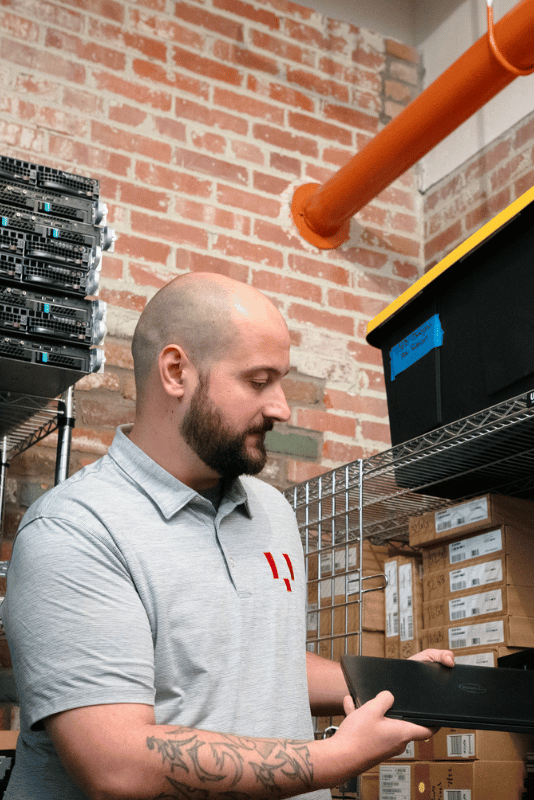
Schedule a visit to Volta, where you can see several storage solutions running in our lab. We can offer an unbiased evaluation of how each might better fit your needs and help you make an informed decision.
Schedule a Visit