IBM Cloudability: The FinOps Platform Built for Cloud Control

TL;DR: IBM Cloudability is an enterprise-grade FinOps platform developed by Apptio that helps organizations manage, optimize, and allocate cloud spending across multi-cloud environments. It delivers cost transparency, rightsizing recommendations, anomaly detection, and AI-backed forecasting, enabling teams to cut multi-cloud unit costs by 30% or more.
Cloud spending has a visibility problem. As organizations scale across AWS, Azure, Google Cloud, and beyond, costs multiply, ownership blurs, and finance teams are left reconciling bills instead of driving strategy. The result is waste, budget overruns, and a growing disconnect between technology investment and business outcomes.
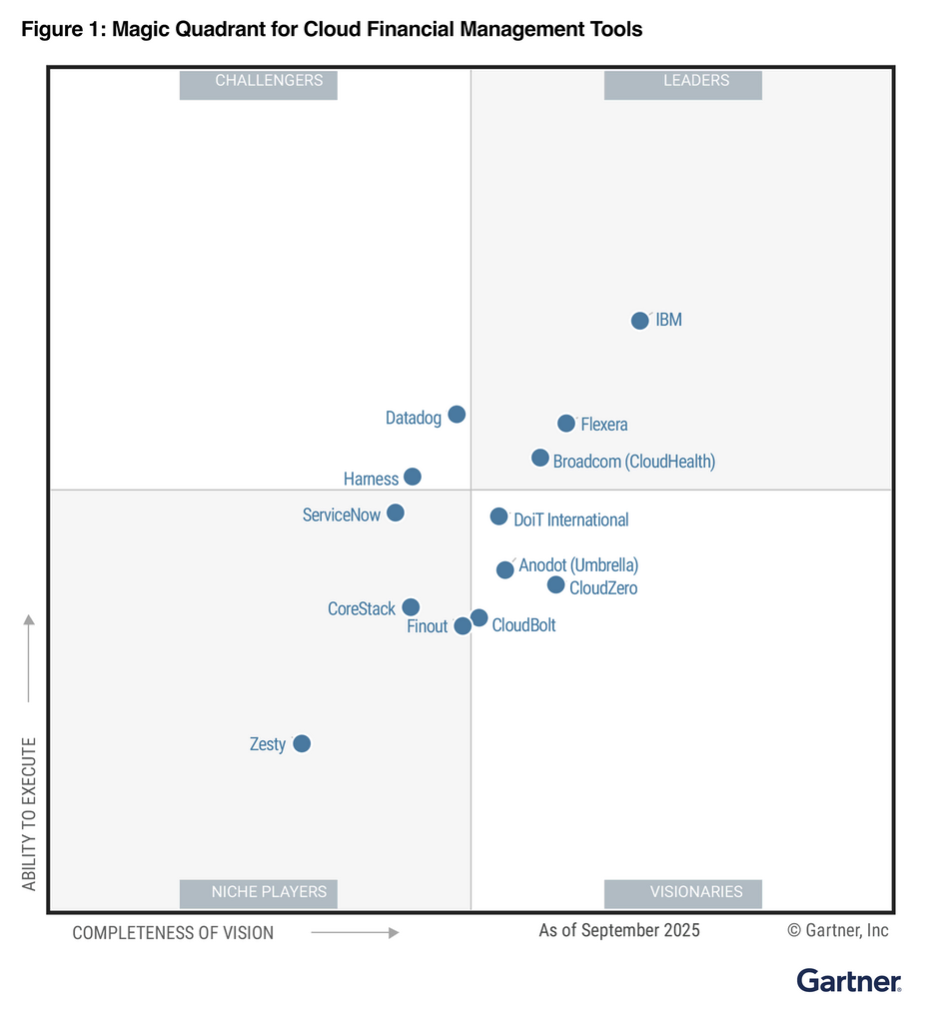
IBM Cloudability, developed by Apptio, addresses this directly. Recognized as a Leader in the 2025 Gartner® Magic Quadrant™ for Cloud Financial Management Tools and positioned furthest for Vision and highest for Execution, IBM Cloudability is trusted by organizations like American Airlines, UBS, BMO, and PepsiCo to bring financial accountability to their cloud programs.
This post breaks down what IBM Cloudability is, why cloud cost management is harder than it looks, what the platform actually does, how different teams use it, and what real customers say about their experience.
What Is IBM Cloudability?
IBM Cloudability is a cloud financial management platform that gives organizations a unified view of cloud and AI spending across providers. It normalizes and structures billing and usage data from public cloud ecosystems, then surfaces actionable insights that allow finance, engineering, product, and leadership teams to act with confidence.
The platform is built around three core outcomes:
- Complete ownership and visibility — Every dollar of cloud spend is allocated, attributed, and visible in a single pane of glass
- Confidence to scale and invest — Teams can forecast, budget, and plan with AI-backed precision rather than best guesses
- Unmatched cost efficiency — Rightsizing, automation, and commitment-based discounts continuously reduce waste without manual effort
What Are the Challenges Around Cloud Spend and TCO?
Cloud economics are counterintuitive. The more you scale, the harder it becomes to understand where money is going. Several forces compound this problem.
- Multi-cloud complexity means costs are spread across different providers, each with its own billing structure, pricing model, and discount mechanism.
- Container and Kubernetes costs are notoriously difficult to allocate. Shared clusters obscure which teams, applications, or workloads are responsible for which spend.
- Commitment-based discounts like Reserved Instances and Savings Plans offer significant savings, but only when managed correctly. Under-utilization wastes money.
- Unplanned anomalies create billing shock. A misconfigured resource, a runaway process, or a new workload can spike costs significantly before anyone notices.
- Total cost of ownership (TCO) goes beyond compute. It includes shared infrastructure costs, labor, vendor fees, and SaaS spend that traditional cloud billing tools simply don’t capture.
These aren’t edge cases. They are the daily operational reality for cloud-heavy organizations, and they represent the challenge IBM Cloudability is designed to solve.
How does IBM Cloudability provide complete cloud cost visibility?
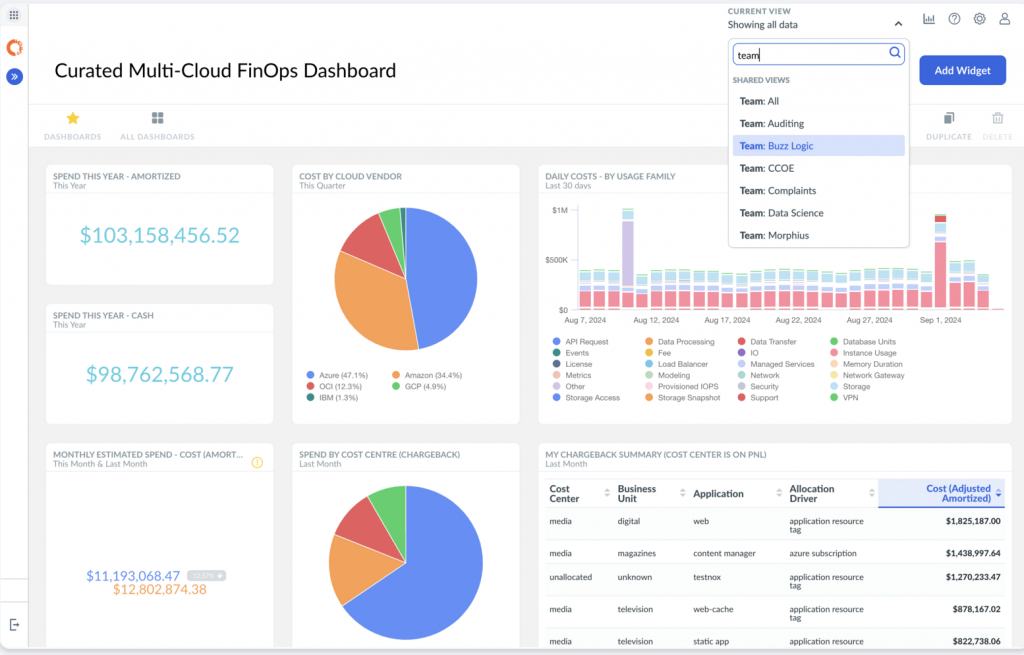
IBM Cloudability gives every team, from FinOps practitioners to product managers, a clear, accurate view of what they own and what it costs.
Key features include:
- Business Mapping: Customizable allocation rules that map cloud resources to business units, applications, and cost centers.
- True Cost Explorer: A flexible analytics engine that lets users drill from high-level summaries into resource-level detail across providers, accounts, regions, and time periods
- Container Cost Allocation: Accurate cost attribution for Kubernetes workloads, breaking down spend to the pod and namespace level.
- Cost Sharing: Tools to distribute shared infrastructure costs, like specialized technology and labor, across the business for a complete TCO view
- Tagging and Views: Personalized dashboards for each team, app, or product, so everyone sees the data that’s relevant to them
How does IBM Cloudability support confident cloud investment decisions?
Scaling cloud investment without guardrails leads to unpredictable spend. IBM Cloudability provides the forecasting and governance infrastructure to grow with financial control.
- AI-Backed Budgets & Forecasts: Bottom-up forecasting informed by historical spend patterns, seasonality, and cost drivers.
- Anomaly Detection: Automated detection of unexpected spending spikes, routed to the right people before costs compound
- Unit Economics: Overlay cloud costs with business metrics in near real time to track cost per customer, transaction, or product feature
- Scorecards and Governance: Benchmarking tools that help teams prioritize FinOps action and enforce accountability across the organization
- Workload Planning: Compare pricing across cloud providers for upcoming deployments to make informed placement decisions
How does IBM Cloudability reduce cloud waste and improve efficiency?
IBM Cloudability helps organizations make every cloud dollar work harder through automation and intelligent recommendations.
- Rightsizing: Machine learning-backed recommendations that evaluate utilization, performance, and safe scaling options, with multiple outcome scenarios and engineering task integrations via Jira and other ITSM tools
- Commitment-Based Discounts: Data-driven recommendations for Reserved Instances and Savings Plans to improve coverage and reduce reliance on costly on-demand pricing
- Automation: The platform can automatically terminate orphaned resources and act on rightsizing recommendations, reducing waste without requiring manual intervention
IBM Cloudability integrates with tools including Jira, Datadog, and PagerDuty, ensuring optimization workflows connect directly to engineering and operations processes.
What Are Customers Saying About IBM Cloudability?
Based on reviews from G2 (4.2/5 across 202 reviews) and TrustRadius, several themes emerge consistently across customer feedback.

Multi-cloud visibility is the standout capability. Reviewers repeatedly highlight the platform’s ability to provide a single source of truth across AWS, Azure, and Google Cloud. One G2 reviewer described being able to “drill down into costs by team, environment, service, or even specific resources” without the manual effort typically required.
Ease of use for a sophisticated tool. Despite the complexity of what the platform handles, customers consistently describe IBM Cloudability as user-friendly. Multiple reviewers mentioned picking up the tool quickly without extensive onboarding.
Rightsizing recommendations drive real savings. One G2 reviewer reported saving nearly $400,000 by cleaning up unused resources identified through the platform. A small business reviewer noted reducing AWS infrastructure costs by 20–25% simply by following the platform’s recommendations.
Cost transparency that changes financial decision-making. Customers across finance, engineering, and executive roles highlight how IBM Cloudability transforms reactive bill review into proactive cost management. A VP of Finance at Lazard described it as “the only tool we have that advises me on how I need to allocate and pay our monthly invoices internally.”
Frequently Asked Questions About IBM Cloudability
What is IBM Cloudability used for?
IBM Cloudability is a FinOps platform that helps organizations manage and optimize cloud spending across multi-cloud environments. Key capabilities include cost allocation, chargeback/showback reporting, rightsizing recommendations, anomaly detection, and budget forecasting across AWS, Azure, and Google Cloud.
How does IBM Cloudability reduce cloud costs?
Through machine learning-powered rightsizing, commitment-based discount optimization, automated removal of orphaned resources, and anomaly detection. Typical customers achieve a 30%+ reduction in multi-cloud unit costs.
Who should use IBM Cloudability?
Enterprise and mid-market organizations running significant multi-cloud workloads. It’s built for cross-functional teams—FinOps practitioners, IT finance professionals, DevOps engineers, and executive leadership.
How does IBM Cloudability differ from native tools like AWS Cost Explorer?
Unlike native tools, IBM Cloudability delivers a unified view across all cloud providers, plus container cost allocation, business mapping for chargeback, AI-backed forecasting, and multi-team governance workflows.
How long does it take to implement IBM Cloudability?
Average implementation takes around 4 months. Despite the initial setup investment, most customers report measurable ROI within the first few months—one reviewer cited a 10x ROI within three months.
What pricing packages does IBM Cloudability offer?
IBM Cloudability offers three tiers: Essentials (core visibility and rightsizing), Standard (unit economics and financial planning), and Premium (advanced optimization and automation). Contact Apptio for pricing.